
BSc Microbiology Admission 2027: Courses, Careers and Higher Studies
Microbiology is a science-focused undergraduate field that explores microorganisms such as bacteria, viruses, fungi and protozoa, along with their role in health, agriculture, food and the environment. With growing interest in laboratory science and biotechnology, students considering BSc microbiology admission can explore a range of academic and professional pathways after completing Class 12.
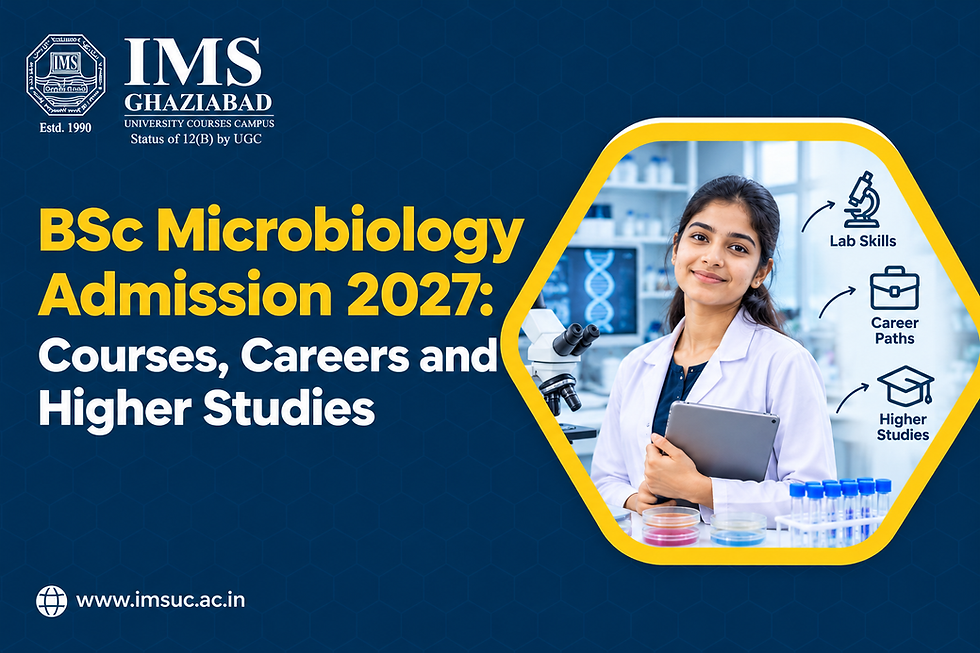
Understanding BSc Microbiology
A Bachelor of Science in Microbiology generally combines theoretical learning with practical laboratory training. The course introduces students to the fundamentals of microorganisms and their interactions with humans, animals, plants and the environment.
Depending on the university, students may study subjects such as:
General Microbiology
Cell Biology
Biochemistry
Molecular Biology
Immunology
Genetics
Microbial Physiology
Environmental Microbiology
Food and Industrial Microbiology
Laboratory sessions are an important part of the programme, helping students develop skills in observation, sample handling, microbial culture and basic laboratory techniques.
Admission Process for 2027
The admission process may differ between universities. Students should check individual eligibility requirements, application deadlines and selection procedures before applying. Typically, applicants are expected to have completed Class 12 with science subjects, particularly Biology or related subjects, from a recognised board.
Some institutions may offer admission based on qualifying examination marks, while others may consider entrance examinations or institutional selection criteria.
Career Opportunities After BSc Microbiology
A microbiology degree can provide a foundation for careers across several sectors. Depending on their skills and additional qualifications, graduates may explore roles in:
Pharmaceutical and biotechnology companies
Food and beverage industries
Clinical and diagnostic laboratories
Research laboratories
Environmental organisations
Quality control and quality assurance
Healthcare-related laboratories
Students interested in management or business-oriented education may also research programmes such as BBA course admission after comparing their academic interests and long-term career goals.
Higher Studies After BSc Microbiology
Higher education can help students develop specialised knowledge and improve their research or professional prospects. Common options include MSc Microbiology, MSc Biotechnology, Molecular Biology, Biochemistry and related life-science programmes. Students interested in research may subsequently consider doctoral studies.
Professional certifications, laboratory training and internships can also complement an undergraduate degree by providing practical exposure.
Conclusion
Choosing a microbiology programme requires consideration of academic interests, course structure, practical training and future study plans. Students preparing for BSc microbiology admission in 2027 should review eligibility criteria, curriculum details and admission schedules carefully. With its combination of scientific concepts and laboratory learning, microbiology can provide a foundation for further education and diverse career pathways. Institutions such as IMS Ghaziabad (University Courses Campus) can be considered by students exploring undergraduate education and their future academic options.


Comments